Developing Practical Skills for Surgical Dental Procedures
Oral surgery involves procedures that require careful assessment, precise technique and an organised approach to patient care. Although dentists learn the basic principles of surgical dentistry during their formal education, additional focused training can provide an opportunity to develop greater familiarity with specific procedures.
Surgical cases may involve differences in anatomy, the position of teeth, surrounding tissues and the patient's overall oral condition. These variations mean that dentists need to think beyond a fixed procedural sequence and understand how clinical findings influence the approach.
Focused education in oral surgery can help dentists strengthen these skills through structured learning and practical exposure.
Why Oral Surgery Requires Careful Clinical Planning
A surgical procedure begins well before the first instrument is used. Patient history, clinical examination and appropriate imaging can help determine the condition and position of the tooth or surrounding structures.
Treatment planning may also involve considering factors such as access, root configuration, proximity to important anatomical structures and the expected difficulty of the procedure.
Learning to evaluate these factors can help dentists approach surgical cases more systematically. It also allows them to recognise situations that may require a different technique or additional specialist input.
What Can Oral Surgery Training Cover?
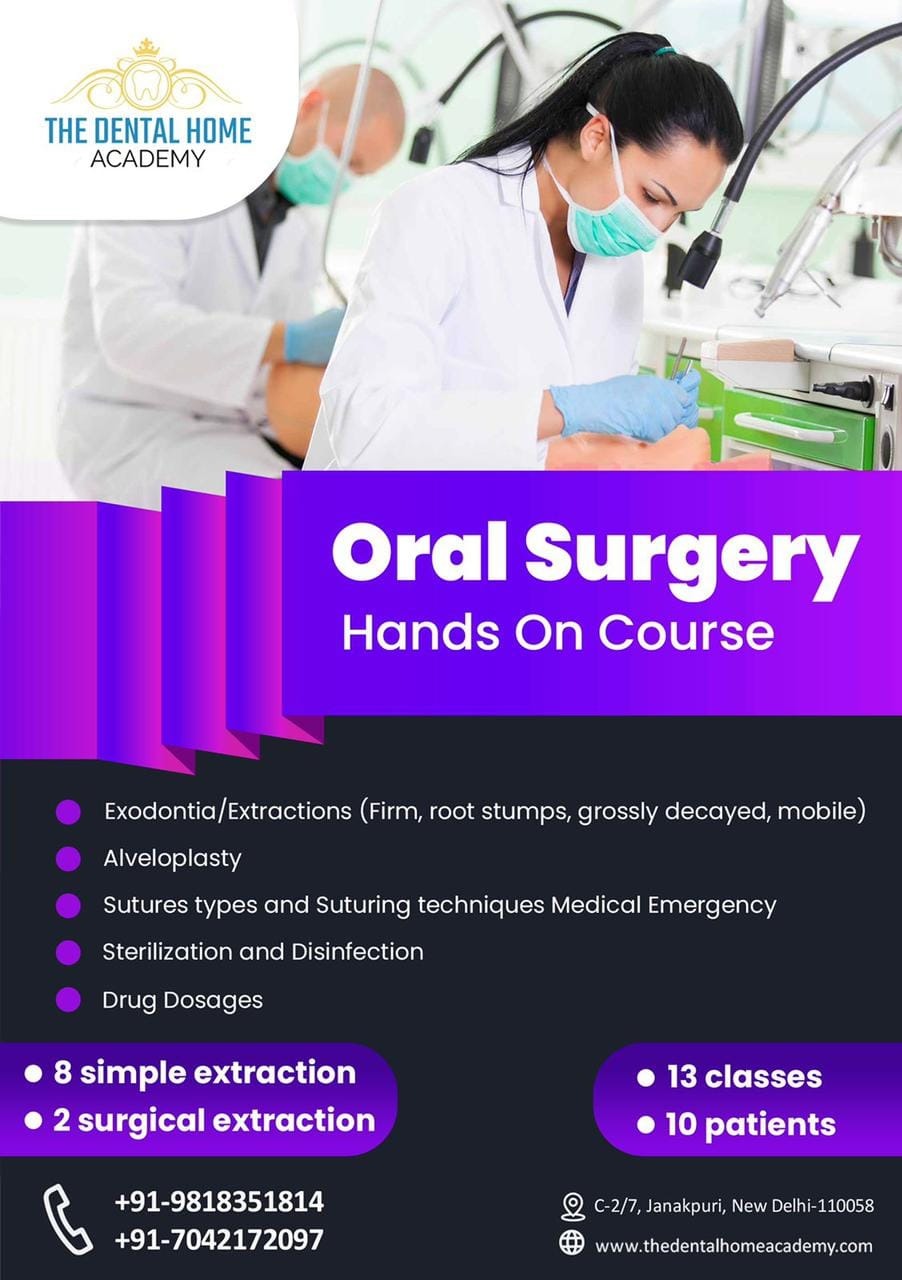
The exact subjects included in an oral surgery programme can vary according to its duration and level. Training may cover procedures such as simple and surgical extractions, management of impacted teeth, minor oral surgical procedures, suturing and postoperative care.
Some programmes may also introduce participants to case selection, surgical instruments, local anaesthesia and methods for managing common procedural challenges. For dentists exploring Best Oral Surgery Courses in New Delhi, looking at the actual curriculum is therefore important. The course title alone does not indicate how deeply each surgical topic will be covered.
Learning to Approach Difficult Extractions
Tooth extraction is one of the procedures where clinical conditions can vary considerably.
A tooth may have unusual root anatomy, limited accessibility, extensive structural damage or an unfavourable position. Impacted teeth can present additional challenges because their position may differ significantly from that of normally erupted teeth.
Training can help dentists understand how factors such as tooth position, surrounding bone and root configuration influence surgical planning. Rather than treating every extraction in the same way, the dentist learns to assess the case and determine an appropriate approach based on the clinical situation.
The Importance of Instrument and Technique Familiarity
Surgical dentistry requires familiarity with instruments and their appropriate use. Elevators, forceps, surgical burs, retractors and suturing instruments each have different purposes.
Practical demonstrations can make these differences easier to understand. Participants can observe how instruments are selected and how controlled movements are used during different stages of a procedure.
The Dental Home Academy includes oral surgery within its range of dental training opportunities, allowing dentists to explore focused learning in surgical areas alongside other clinical disciplines.
Hands-On Training Can Strengthen Surgical Learning
Oral surgery is a field where practical exposure can be particularly valuable. Reading about a procedure may explain its steps, but observing and practising techniques can provide a different level of understanding.
Hands-on learning can help participants become more familiar with positioning, instrument handling, procedural sequencing and clinical decision-making.
Supervised practice is also useful because learners can receive guidance while performing or observing a technique. This can help connect theoretical principles with the practical realities of surgical dentistry.
Patient Management Is Part of Oral Surgery
Successful oral surgery involves more than the procedure itself. Communication with the patient before treatment can help establish expectations and explain what the procedure involves.
Postoperative instructions are equally important. Patients may need guidance regarding oral hygiene, eating, activity levels and symptoms that can occur during normal recovery. Understanding how to communicate these points clearly forms an important part of responsible surgical practice. Training that includes discussion of patient management can therefore provide a broader learning experience than a programme focused only on technical procedures.
Learning About Surgical Complications
Even a carefully planned procedure can involve unexpected difficulties. Excessive bleeding, tissue trauma, difficult access or postoperative discomfort are examples of situations that may require appropriate management.
Learning about potential complications can help dentists recognise them and understand the importance of prevention, timely assessment and suitable management.
This is another reason practical education can be useful. Discussing clinical situations and observing how experienced professionals approach challenges can add context that may be difficult to gain from theoretical material alone.
Selecting an Oral Surgery Course
Dentists have different levels of experience and may therefore require different types of training. A recently graduated dentist may want to strengthen fundamental surgical principles, while an experienced practitioner may be interested in improving particular procedures.
Before selecting a programme, it is useful to consider the topics covered, course duration, practical exposure, faculty experience, patient-based learning and the level of supervision provided. The right programme should correspond with the learner's existing knowledge and the surgical skills they want to develop.
Building Surgical Skills Through Continued Practice
Completing an oral surgery course is one stage of professional learning. Consistent clinical practice remains important for developing familiarity with different cases and refining technique over time.
Dentists can continue learning by reviewing their clinical experiences, keeping up with developments in surgical dentistry and identifying areas where additional training may be useful. A focused course can provide structured education, while continued experience helps translate that learning into everyday clinical practice.
Frequently Asked Questions
Who can benefit from oral surgery courses?
Dental graduates and practising dentists may consider oral surgery training when they want to strengthen their understanding or practical skills in surgical procedures.
What procedures can be covered in oral surgery training?
Depending on the programme, subjects may include extractions, surgical extractions, impacted teeth, minor oral surgery, suturing, local anaesthesia and postoperative management.
Is hands-on training important for oral surgery?
Practical exposure can help dentists become more familiar with surgical instruments, positioning, procedural techniques and clinical decision-making.
Can beginners learn oral surgery?
The suitability of a programme depends on its eligibility requirements and level. Foundational courses may be appropriate for learners with limited surgical experience, while advanced programmes may require greater clinical knowledge.
What should I check before choosing a course?
Consider the syllabus, practical exposure, course duration, faculty interaction, patient-based training and whether the level of instruction matches your current experience.
CTA
Dentists considering Best Oral Surgery Courses in New Delhi can explore focused surgical training with The Dental Home Academy. Choose a programme that matches your existing clinical knowledge and the oral surgery skills you want to strengthen.
Meta Title
Best Oral Surgery Courses in New Delhi | The Dental Home Academy
Meta Description
Explore focused oral surgery education covering surgical extractions, impacted teeth, practical techniques and patient management in New Delhi.
- Best oral surgery courses in Delhi
- Best oral surgery courses in South Delhi
- Best oral surgery courses in North Delhi
- Best oral surgery courses in West Delhi
- Best oral surgery courses in Paschim Vihar
| Tags: |