
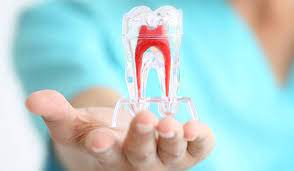
Best Endodontic courses
Root canal treatment involves more than simply removing infected tissue from inside a tooth. The procedure follows a sequence in which each stage contributes to the next. For dentists developing their endodontic skills, understanding this sequence can be as valuable as learning an individual technique.
A structured endodontic programme can help connect diagnosis, access, canal preparation, irrigation, shaping and obturation into one clinical process. This gives learners a clearer view of how different stages relate to the final treatment.
Treatment Begins With Understanding the Tooth
Before instruments enter the canal system, the tooth needs to be assessed. Clinical findings and appropriate diagnostic information help determine whether endodontic treatment is indicated and what difficulties may need consideration.
Tooth anatomy can vary considerably. Curved canals, multiple canals, calcification and restricted access can make some cases more demanding than others.
Training can therefore begin with understanding the clinical situation rather than immediately focusing on instrumentation.
Access Determines What Comes Next
Creating appropriate access to the pulp chamber is an important early stage of root canal treatment. The objective is to reach the canal system while preserving as much sound tooth structure as reasonably possible.
Once access has been established, the clinician needs to identify the canals and work through the anatomy carefully.
Early Endodontic Steps Can Include
-
Clinical and radiographic assessment
-
Planning the access cavity
-
Locating canal openings
-
Establishing working length
-
Understanding canal anatomy
Each step creates the foundation for the next part of treatment.
Cleaning and Shaping Require Controlled Technique
Root canal instrumentation is intended to prepare the canal system for effective cleaning and filling. Hand instruments and rotary systems may be used depending on the case and the clinician's chosen technique.
The objective is not simply to enlarge a canal. The clinician needs to work with its existing anatomy while reducing infected or unwanted material and creating a suitable shape for subsequent stages.
This is an area where practical understanding can make procedural concepts easier to appreciate.
Irrigation Is Part of the Cleaning Process
Mechanical instrumentation is only one component of canal cleaning. Irrigation is also used during endodontic treatment to help manage debris and microorganisms within areas that instruments may not contact directly.
The choice and handling of irrigating solutions require appropriate clinical knowledge and safety precautions.
A course that explains instrumentation without placing it within the broader cleaning process can leave learners with an incomplete understanding of the procedure.
Obturation Brings the Procedure Toward Completion
After appropriate cleaning and shaping, the prepared canal system can be filled using an appropriate obturation technique.
Obturation is not an isolated final step. Its effectiveness is related to the quality of the preparation that came before it.
Endodontic Learning Works Best as a Connected Process
-
Diagnosis influences treatment selection
-
Anatomy influences access and instrumentation
-
Cleaning and shaping prepare the canal for filling
-
Irrigation supports canal disinfection
-
Obturation follows adequate preparation
-
The treated tooth still requires appropriate restoration
Seeing these relationships can help learners understand root canal treatment as a complete procedure rather than a collection of unrelated techniques.
The Dental Home Academy and the Importance of Case Understanding
The Dental Home Academy approaches endodontic learning with attention to the differences between individual root canal cases. A tooth with simple canal anatomy may require a different level of planning and technical control than a case involving curved canals, unusual anatomy or other complexities.
For dentists developing their endodontic skills, learning to recognise these differences can be an important part of clinical training. Understanding when a technique is suitable, what challenges may arise and how the case should be approached can make practical learning more meaningful.
Training that combines procedural knowledge with case-based understanding can help dental professionals build greater familiarity with endodontic treatment. It also allows learners to strengthen their understanding of the clinical considerations that influence treatment planning and execution.
Frequently Asked Questions
What areas are commonly covered in root canal training?
Depending on the programme, training may cover diagnosis, access preparation, canal location, working length, cleaning, shaping, irrigation and obturation.
Are all root canal cases technically similar?
No. Canal anatomy and other clinical factors can make some cases considerably more complex than others.
Why is treatment sequence important in endodontics?
Each stage contributes to the next. Understanding the sequence helps learners see how diagnosis, preparation, cleaning and filling work together.
CTA
For dentists considering Best Endodontic courses in Dwarka, contact The Dental Home Academy to enquire about endodontic training and its course content.
Meta Description: Understand the clinical sequence of root canal treatment, from diagnosis and access to canal preparation, irrigation and obturation.
- Best Endodontic courses in Janakpuri
- Best Endodontic courses in Tilak Nagar
- Best Endodontic courses in Uttam Nagar
- Best Endodontic courses in Dwarka
- Best Endodontic courses in Vikaspuri
- Best Endodontic courses in Subhash Nagar
- Best Endodontic courses in Ramesh Nagar
| Tags: |