
Root canal courses
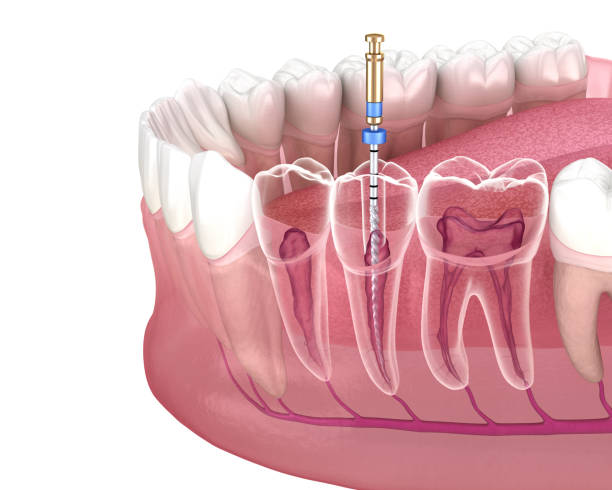
Root canal treatment can appear straightforward when described as a sequence of cleaning, shaping and filling the canals. Clinical cases, however, can differ considerably because tooth anatomy is not always predictable or simple.
For dentists developing endodontic skills, recognising these variations is an important part of learning. A procedure that is manageable in one tooth may require greater technical attention in another because of canal curvature, calcification, limited access or unusual anatomy.
Canal Anatomy Can Change the Difficulty
Root canals do not all follow the same shape. Some may be relatively straight, while others can curve, narrow or divide.
These anatomical differences influence how instruments are introduced and how the canal is prepared. Understanding canal anatomy therefore goes beyond identifying the number of canals. The clinician needs to appreciate their direction, shape and potential difficulties during treatment.
Calcified Canals Require Careful Approach
Calcification can make locating and negotiating a canal more difficult. The canal space may be narrow or partially obscured, increasing the need for controlled access and careful instrumentation. Training can help dentists understand the principles involved in approaching such situations rather than assuming that every canal will be immediately visible.
Factors That Can Make Canal Location Difficult
-
Calcification
-
Unusual tooth anatomy
-
Narrow canal spaces
-
Multiple canals
-
Previous dental treatment
-
Restricted access
The appropriate approach depends on the clinical case.
Working Length Is More Than a Number
Determining working length is an important part of endodontic treatment because instrumentation and filling need to correspond appropriately with the canal being treated.
Clinical and diagnostic methods may be used to establish working length. The process requires attention to both the tooth anatomy and the information available during treatment. A training programme can help learners understand why accurate working length determination matters rather than treating it as a routine measurement without context.
Instrumentation Requires Awareness of Canal Shape
Cleaning and shaping must be carried out with consideration for the existing canal anatomy. Excessive or inappropriate instrumentation can create procedural problems, particularly in curved or narrow canals.
Rotary and hand instrumentation each have their place in endodontic practice, depending on the clinician's technique, equipment and clinical situation. The objective is to prepare the canal effectively while working within its anatomical limitations.
Isolation and Visibility Also Matter
A technically demanding procedure requires appropriate working conditions. Isolation helps control moisture and contamination, while adequate access and visibility allow the clinician to work more effectively.
These details may seem less dramatic than instrumentation, but they are part of the clinical environment in which endodontic procedures are performed.
Endodontic Technique Involves More Than Instrument Choice
-
Access needs to provide appropriate entry
-
Canal anatomy needs to be understood
-
Working length needs to be established
-
Instruments need controlled handling
-
Irrigation forms part of canal cleaning
-
The canal needs suitable preparation before obturation
Each element contributes to the overall procedure.
Planning Begins Before the Procedure
The Dental Home Academy can be relevant for dentists who want to strengthen the thinking that comes before an endodontic procedure. Root canal treatment involves more than carrying out individual steps; the dentist first needs to consider the tooth, the available clinical information and the treatment approach that may be appropriate.
Pre-treatment assessment can influence how a dentist prepares for the procedure. Radiographic findings, canal anatomy, access requirements and the condition of the tooth can all become part of that planning process. Developing greater familiarity with these considerations can help practitioners approach endodontic cases with a more organised clinical perspective.
For dentists looking to develop their knowledge beyond the basic sequence of root canal treatment, focused endodontic education can offer a way to spend time on the planning principles and procedural considerations that form part of everyday clinical practice.
Learning Should Include the Reason Behind the Technique
Memorising instrument sequences has limited value if the learner does not understand why the sequence changes in different clinical situations.
A stronger learning approach connects technique with anatomy, diagnosis and case difficulty. This allows dentists to understand the principles behind a procedure rather than relying on one fixed method.
Frequently Asked Questions
Why can some root canals be more difficult than others?
Differences in canal anatomy, curvature, calcification, access and previous treatment can increase technical difficulty.
Does every root canal require the same instrumentation approach?
No. Instrumentation depends on the tooth, canal anatomy, clinical situation and technique being used.
Can training help dentists recognise difficult endodontic cases?
Focused education can introduce learners to anatomical variations and procedural challenges that may occur during root canal treatment.
CTA
For dentists looking to strengthen their understanding of challenging endodontic cases, The Dental Home Academy connects the clinical focus of Root canal courses in Subhash Nagar with training centred on real procedural complexities.
Meta Description: Explore the clinical challenges that can affect root canal treatment, including curved canals, calcification, working length and instrumentation.**
- Root canal courses in Janakpuri
- Root canal courses in Tilak Nagar
- Root canal courses in Uttam Nagar
- Root canal courses in Dwarka
- Root canal courses in Vikaspuri
- Root canal courses in Subhash Nagar
- Root canal courses in Ramesh Nagar
| Tags: |