
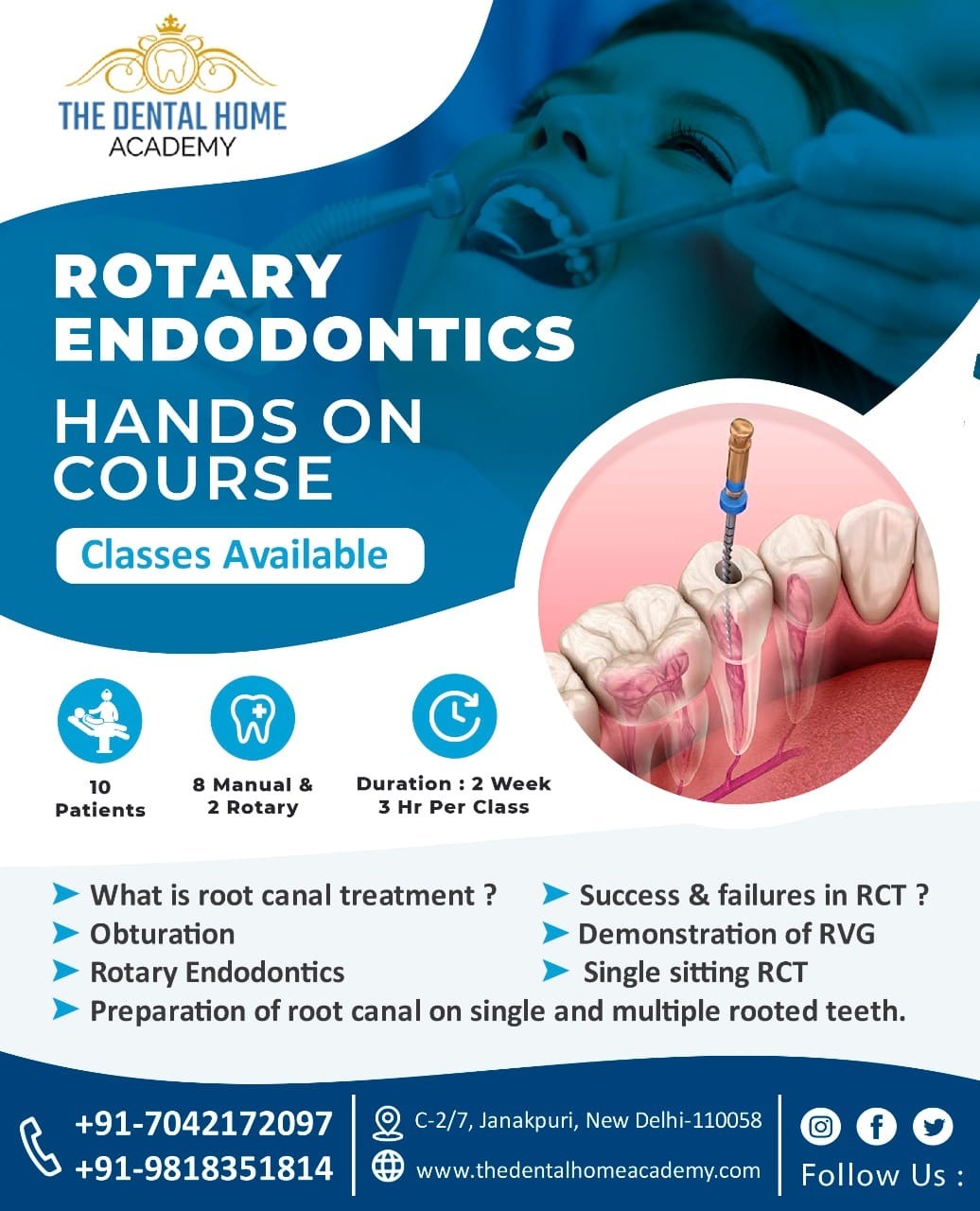
Rotary endodontics courses
Endodontic instrumentation has changed considerably with the development of rotary systems. Instead of relying entirely on manual filing, dentists can use engine-driven instruments designed to shape root canals according to a planned technique.
Learning rotary endodontics, however, is not simply a matter of learning how to operate a motor. The clinician needs to understand canal anatomy, instrument characteristics, preparation sequence and the conditions in which a rotary system should be used.
Rotary Files Work Within a Planned System
Rotary instruments are designed to rotate inside the prepared canal and remove dentine in a controlled manner.
Different systems have different file designs, sequences and operating requirements. This means dentists need to understand the particular system being used rather than treating every rotary file as interchangeable.
Training can introduce the principles behind these systems and how they fit into canal preparation.
A Glide Path Can Influence Instrumentation
Before larger rotary instruments are used, establishing a suitable glide path can help create a controlled route through the canal.
This is particularly relevant in canals where anatomy is narrow or curved. The clinician needs to understand the existing canal before asking a rotary instrument to shape it.
Preparation May Involve
-
Canal negotiation
-
Establishing a glide path
-
Selecting an appropriate file sequence
-
Controlling instrument movement
-
Irrigating during preparation
-
Monitoring working length
The exact sequence depends on the technique and clinical case.
Speed and Torque Are Part of the Technique
Rotary systems operate according to specific mechanical requirements. Speed and torque settings can vary according to the instrument system and manufacturer's instructions.
Understanding these parameters matters because rotary instrumentation involves mechanical forces that need to be controlled.
A course focused on rotary endodontics can therefore be more useful when it explains not only what settings are used, but why controlled operation matters.
Instrument Separation Is a Clinical Consideration
Rotary instruments are not risk-free. Excessive stress, incorrect use, canal anatomy and repeated use can contribute to instrument fatigue or separation.
This does not mean rotary instrumentation is inherently unsafe. It means the technique requires appropriate knowledge, case selection and instrument handling.
Learning how to recognise situations that place greater stress on an instrument is part of developing responsible technique.
Rotary Does Not Replace Endodontic Judgement
The presence of a rotary system does not remove the need for diagnosis or clinical decision-making.
The dentist still needs to determine whether root canal treatment is appropriate, understand the anatomy and establish a suitable treatment sequence.
Technology can support the procedure, but it does not decide how a particular canal should be treated.
The System Needs to Fit the Clinical Case
Rotary instrumentation is closely connected to the anatomy of the canal being treated. Curvature, narrow or wider spaces, calcification and changes in canal shape can affect how instrumentation needs to be approached during root canal treatment.
For dentists learning rotary techniques, this makes anatomical assessment an important part of the process. Rather than following the same instrument sequence for every tooth, practitioners need to understand how the characteristics of an individual canal can influence their approach.
The Dental Home Academy brings these considerations into endodontic learning, allowing dentists to study rotary instrumentation in relation to canal anatomy, treatment planning and the practical demands of root canal procedures.
Building Familiarity With Rotary Work
Dentists learning a new instrumentation system may need time to become familiar with file sequence, handling and procedural rhythm.
Training provides an opportunity to study these elements in a structured setting before applying knowledge within appropriate clinical circumstances.
Frequently Asked Questions
Is rotary endodontics the same as using hand files?
No. Rotary systems use engine-driven instruments and follow specific mechanical and procedural principles.
Why is a glide path relevant to rotary instrumentation?
It can help create a controlled pathway for subsequent rotary instruments, particularly in narrower or more complex canals.
Does rotary instrumentation eliminate the need for clinical judgement?
No. Diagnosis, anatomy, case selection and procedural decisions remain important parts of endodontic treatment.
CTA
Dentists who want to add rotary instrumentation to their clinical skill set can explore Rotary endodontics courses in West Delhi at The Dental Home Academy. The training can help practitioners become more familiar with rotary systems, instrumentation principles and the clinical considerations involved in incorporating these techniques into root canal treatment.
Meta Description: Understand rotary endodontic instrumentation, including glide paths, file systems, speed, torque, instrument handling and canal anatomy.
- Rotary endodontics courses in Delhi
- Rotary endodontics courses in South Delhi
- Rotary endodontics courses in North Delhi
- Rotary endodontics courses in West Delhi
- Rotary endodontics courses in Paschim Vihar
| Tags: |